 Saint Kitts and Nevis
Climate:
St Kitts and Nevis is hot and dry from November to March, and rainy from May to November. But you can handle it!
Location:
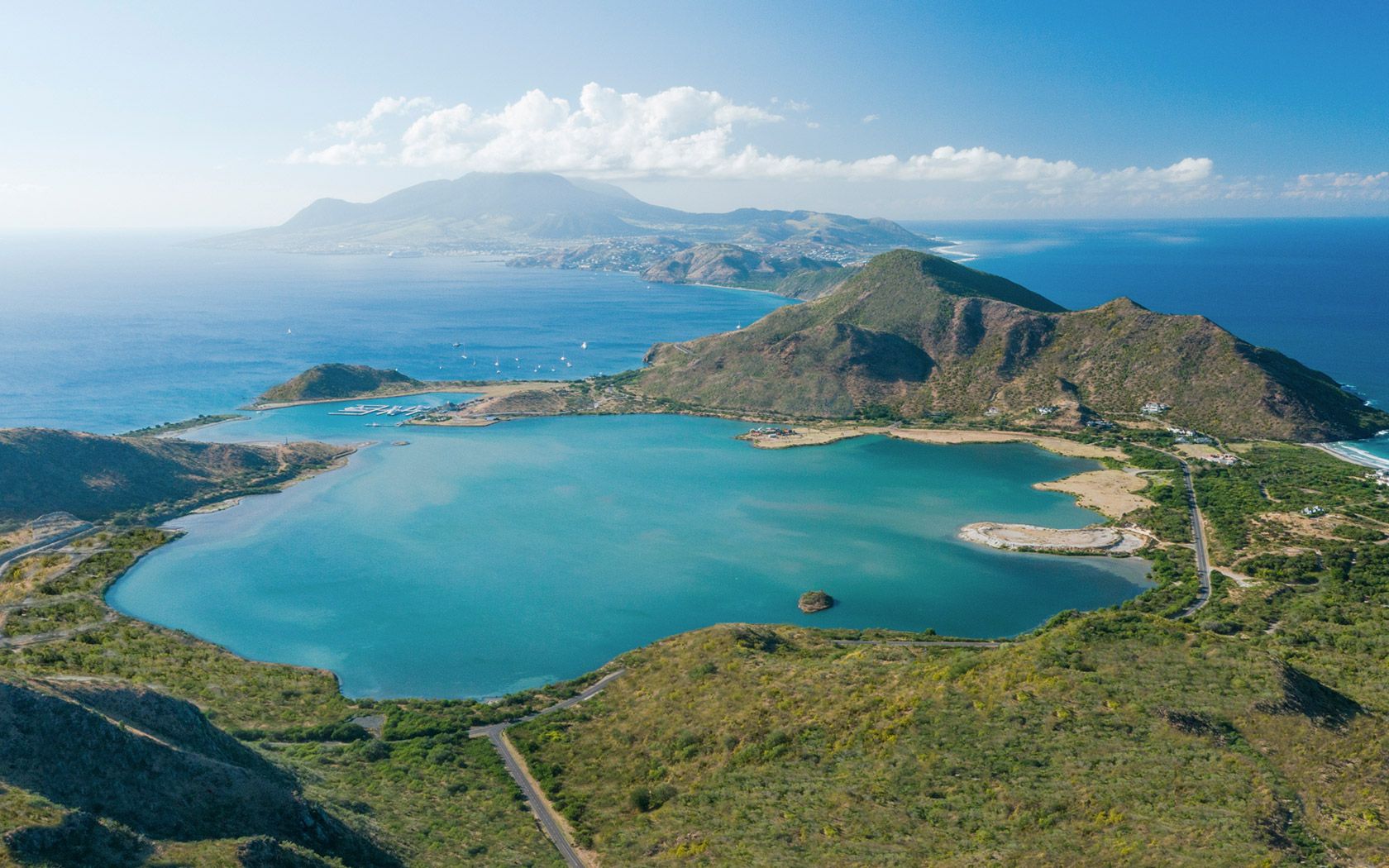
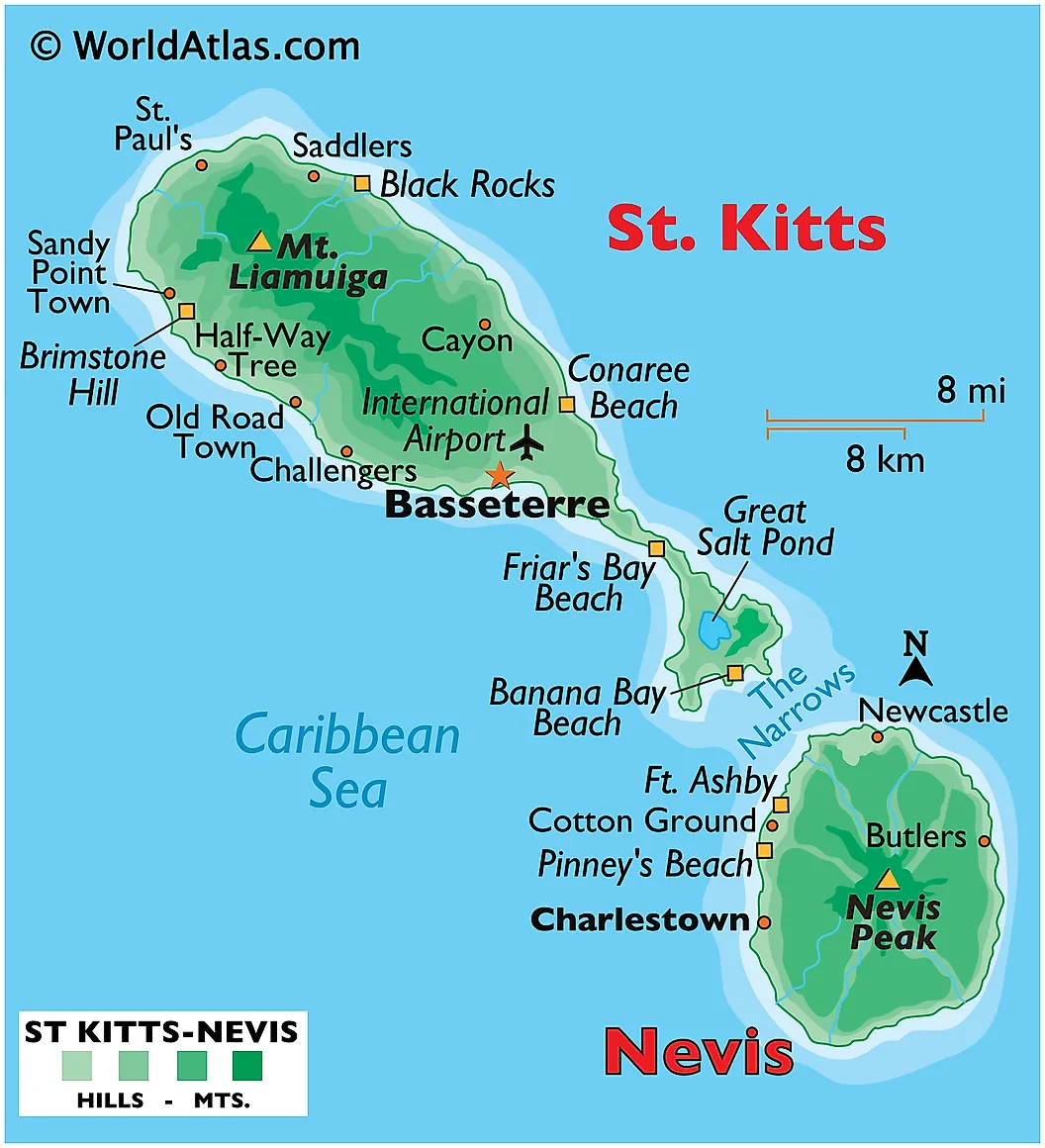
St. Kitts and Nevis consists of two islands in the Caribbean below the Gulf of Mexico. These islands are called Saint Kitts, and Nevis. This is how most Caribbean country names are named, like Trinidad and Tobago, with islands named Trinidad and Tobago.
History:
St. Kitts and Nevis was first inhabited by the Arawak, and after them the Kalinago. The Kalinago called St. Kitts and Nevis Liamuiga, which meant "land of the beautiful waters".
In 1493, Christopher Columbus sighted St. Kitts and Nevis but did not stop there. He named St. Kitts San Christóbal, meaning Saint Christopher. He named Nevis Nuestra Señora de las Nieves, meaning "Our Lady of the Snows".
In 1623, an explorer created the first British settlement in the Caribbean on St. Kitts. This earned the name "The Mother Colony of the West Indies".
In 1625, the French arrived and took over St. Kitts. This was then stopped by the Treaty of Versailles, which then led to Nevis being occupied by the British and St. Kitts occupied by France.
In 1834, slavery was abolished, so a lot of people were put into mid-citizenship, like they were stuck between being a citizen, or being nothing with no passport.
In 1983, St. Kitts and Nevis received full independence, which later led the economy to rely on tourism and international trade and export.
Saint Kitts and Nevis information:
Capital: Bassetere
Population: ~48,000
Languages: English
Currency: Eastern Caribbean Dollar
Sources: St Kitts and Nevis Flag, Wikipedia, Teacher In A Box, WordPress, Brittanica